
Plytech
Ghana Ltd
+233 55 123 9577
Customer Care
Request a Quote
At Plytech Ghana Ltd, plywood production is carried out through a carefully controlled process that transforms quality timber logs into strong, durable, and reliable plywood. From log preparation to final grading, each stage is handled with attention to quality, precision, and consistency.

The production process begins with debarking, where the outer bark of the timber logs is removed. This prepares a clean and smooth log surface for further processing and helps protect the production equipment from dirt, stones, and other unwanted materials that may be trapped in the bark.

After debarking, the logs are cross-cut into predetermined lengths suitable for the veneer peeling machines. Accurate cutting at this stage ensures efficient use of the raw material and helps produce veneers of the required dimensions.

The prepared logs are loaded onto the veneer peeling machines, where they are rotated against a cutting blade. The logs are peeled into continuous thin sheets of wood known as veneer, which form the primary material used in plywood production.

The freshly peeled veneer is then clipped into the required sizes and dimensions. This process removes irregular sections and prepares uniform veneer sheets for the subsequent stages of production.

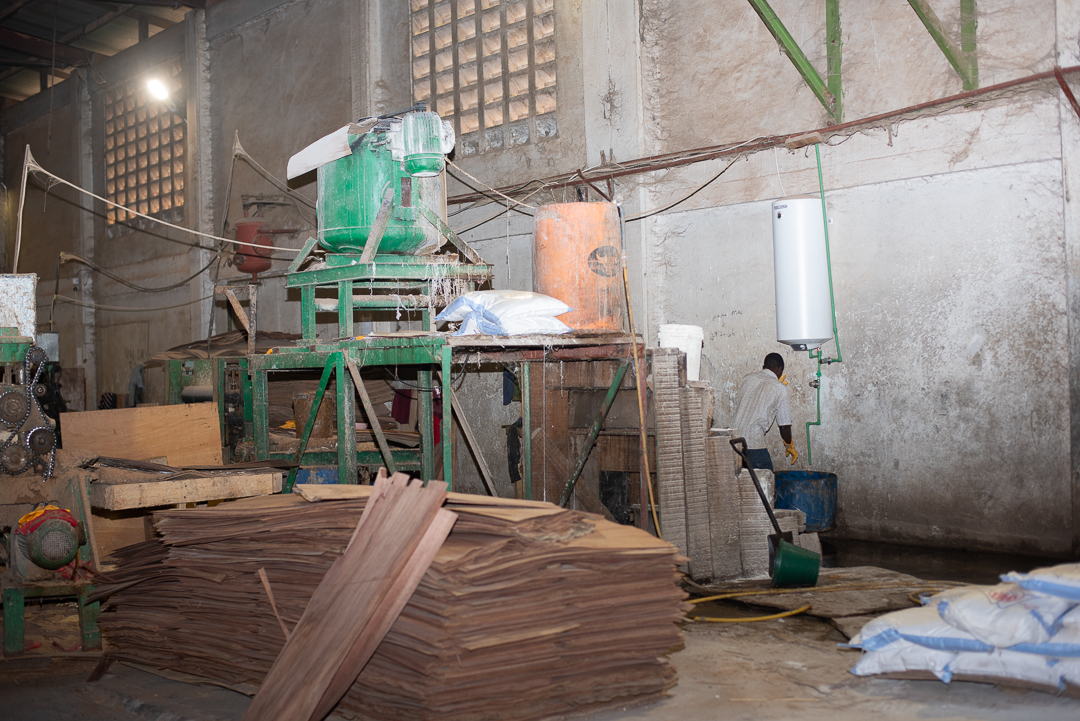
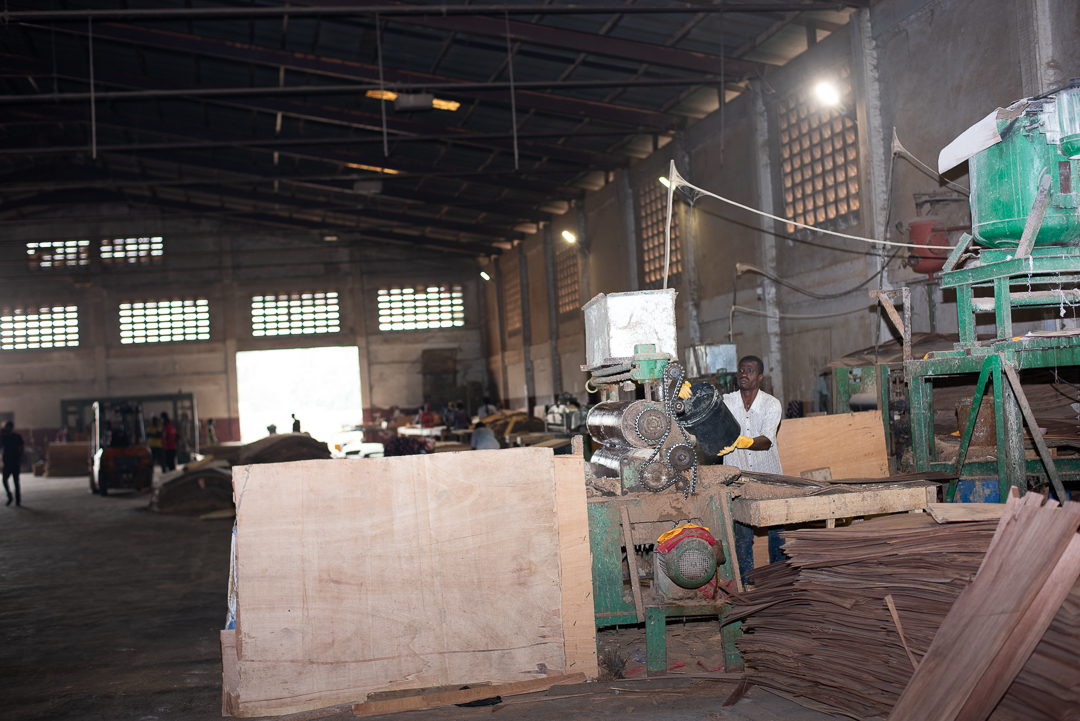
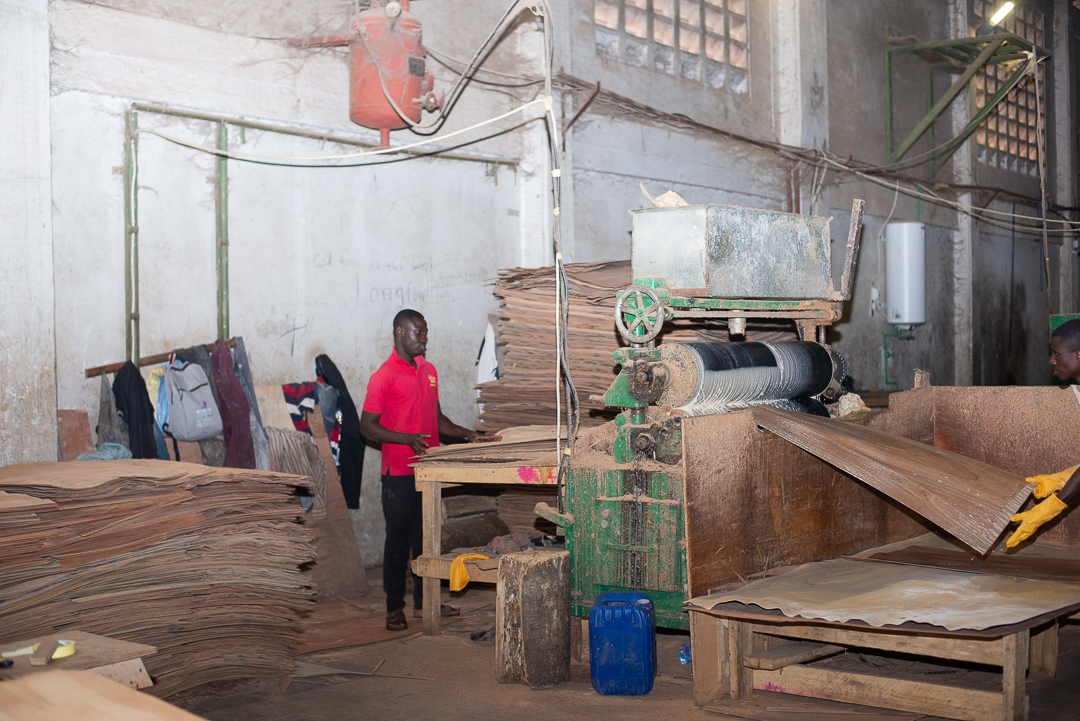
Veneer sheets are fed through mechanical glue spreaders that apply a uniform layer of adhesive — urea-formaldehyde for standard grades or phenol-formaldehyde for marine and exterior grades. Core and face veneers are assembled in alternating cross-grain layers to create dimensionally stable panels.

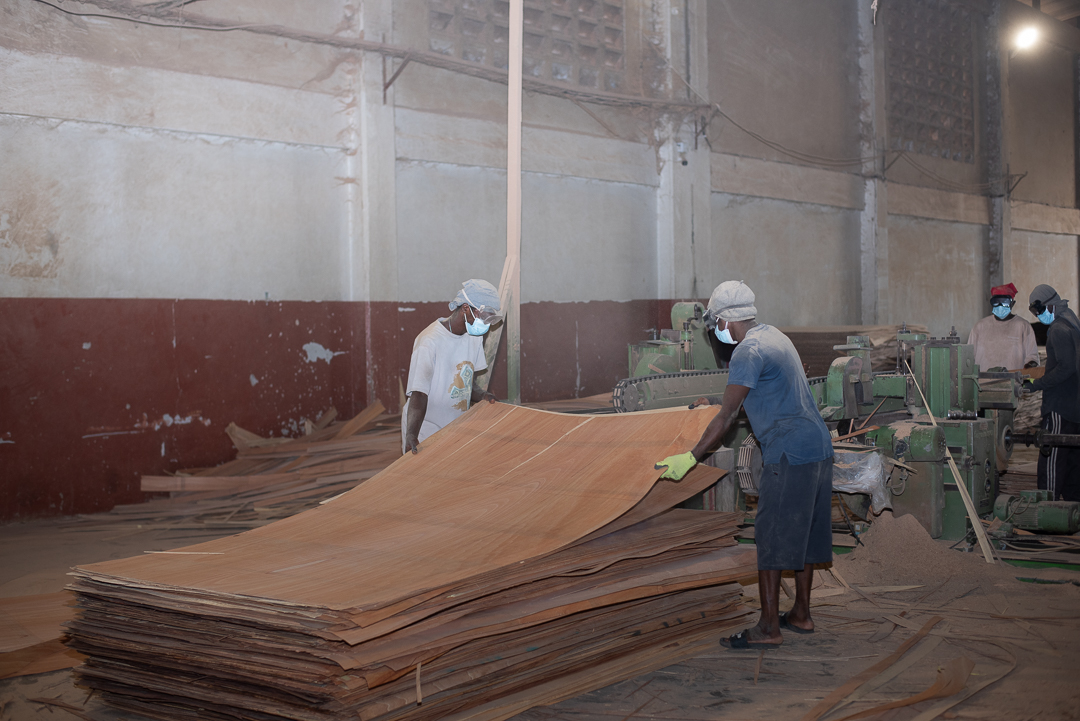
The peeled veneer sheets are passed through industrial veneer dryer machines, where controlled heat and airflow are used to reduce the moisture content to the required level. This process prepares the veneers for effective glue bonding and helps maintain their strength, stability, and quality during plywood construction. Once properly dried, the veneers are inspected and sorted before moving to the gluing and spreading stage.
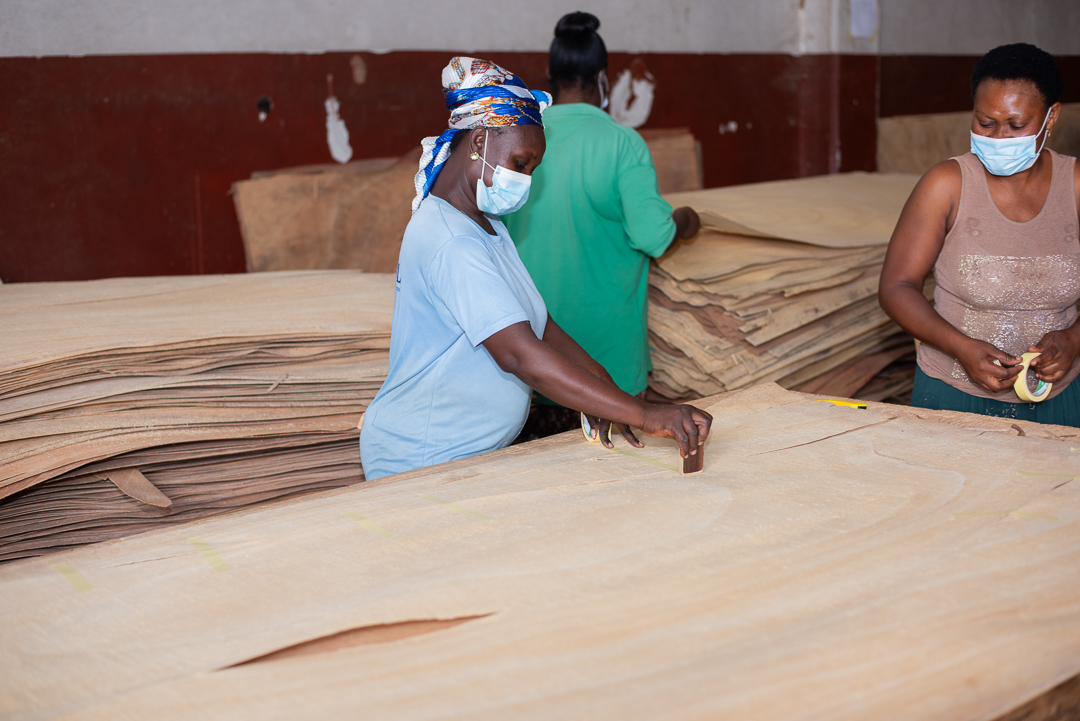
The Veneer Jointing stage involves joining or repairing veneer pieces by applying adhesive tape to their edges. This helps create continuous, properly aligned veneer sheets from smaller pieces, improving material utilization and ensuring the veneers are ready for the spreading and plywood construction process.

At this stage, the dried and sorted veneers are carefully arranged in layers according to the required plywood thickness and construction. The veneers are positioned with their wood grain directions alternating between layers to provide strength, stability, and structural integrity to the finished plywood.
Adhesive is applied evenly to the appropriate veneer surfaces, and the layers are assembled and aligned to form the plywood panel. Proper spreading and lay-up are essential to achieving uniform bonding and consistent quality during the subsequent hot pressing process.

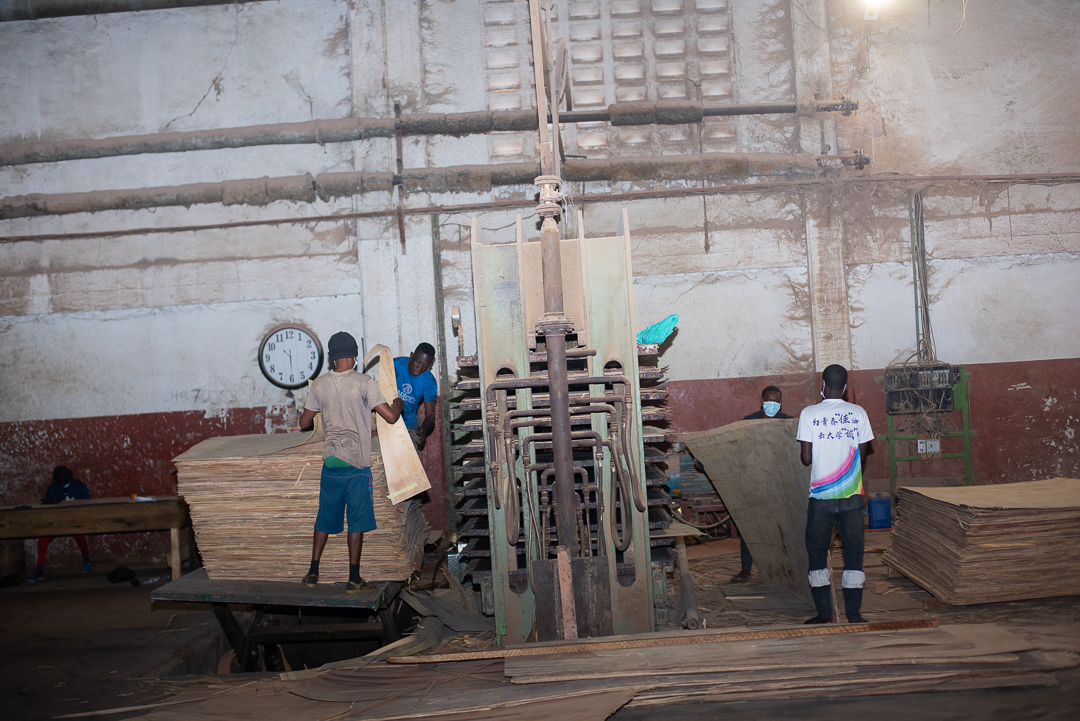
The assembled veneer layers are placed into industrial hot press machines, where controlled heat and pressure are applied to bond the layers firmly together. The heat activates the adhesive, while the pressure ensures proper contact and uniform bonding between the veneers. This process transforms the assembled veneer layers into a strong, stable, and durable plywood panel, ready for the subsequent sizing, finishing, and grading stages.

After hot pressing, the plywood panels are passed through sizing machines to trim the edges and achieve the required dimensions. This process ensures that each sheet has clean, straight, and uniform edges, producing plywood panels that are ready for final inspection, grading, and packaging.

Each completed panel passes through our rigorous quality control process. Trained inspectors assess dimensional accuracy, surface quality, bond strength, moisture content, and visual grade. Panels are graded and segregated into product categories. Only panels meeting specification are approved for sale.

Graded panels are stacked and bundled in standard units for storage and transport. Each bundle is stamped with product grade, thickness, dimensions, and batch information.

Once the plywood has passed final inspection and grading, the finished products are carefully prepared, stacked, and loaded for dispatch. Our team ensures that the plywood is properly handled and securely arranged for safe transportation to customers and distributors across Ghana and international export partners.
The loading and dispatch stage is the final step in our production process, ensuring that quality plywood reaches our customers in good condition, on time, and ready for use.



Contact us to arrange a factory visit or to discuss how our production capabilities can meet your specific plywood requirements.